

Ultrasonic pest repellers are largely ineffective according to decades of scientific research and warnings from regulatory bodies like the FTC. These devices fail to provide reliable protection against common pests and create a dangerous false sense of security, delaying the implementation of proven pest control solutions.
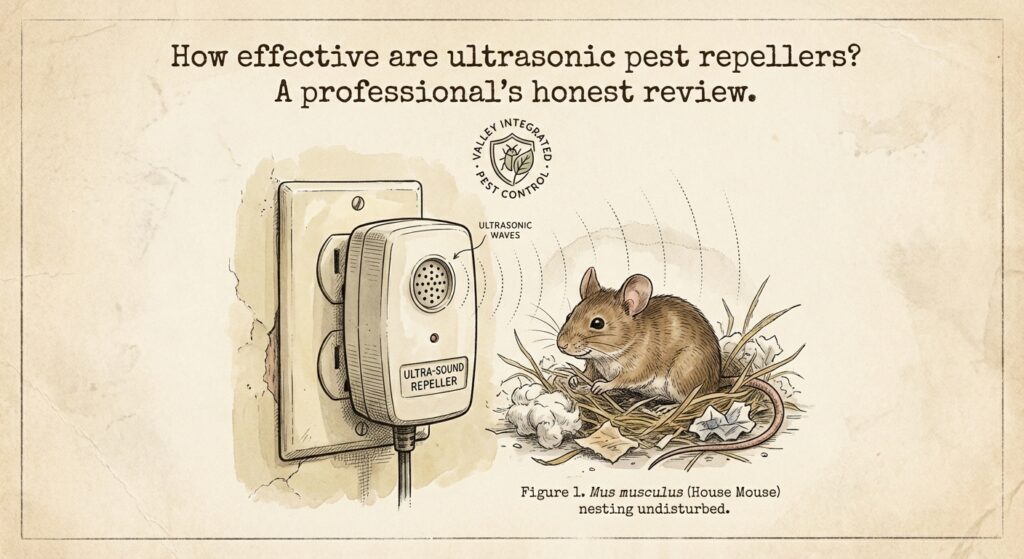
The ‘Set-and-Forget’ Seduction: Why We All Want to Believe
It’s an alluring promise: a small, silent device you plug into the wall to rid your house of pests. No chemicals, no traps, no mess. This is the marketing genius behind the ultrasonic pest repeller. Manufacturers present a vision of effortless, chemical-free pest control that is both pet-safe and child-safe. For a homeowner worried about spiders, ants, or the occasional mouse, the appeal of these non-toxic solutions is undeniable. You simply set it and forget it, and the ultrasonic sound waves will drive pests away.
This “set-and-forget” mentality, however, clashes with the hard reality of how pest infestations work. Pests are not passive intruders; they are active survivalists seeking food, water, and shelter in your home. A true solution requires a more thoughtful strategy than simply plugging in a gadget. The allure of an easy fix can unfortunately lead homeowners to ignore the crucial first steps of Integrated Pest Management (IPM), such as sealing entry points, eliminating food sources, and addressing moisture issues. The belief in an electronic pest control shield lulls people into a state of inaction, allowing a minor issue to escalate into a full-blown infestation.
Deconstructing the ‘Science’: A Long History of Doubt
To understand why these devices fail, we need to look at the claims versus the science. The core idea is that these repellers emit high-frequency sound waves, typically above 20 kHz, which are inaudible to humans but supposedly create an acoustically hostile environment for pests like rodents and insects. The sound is meant to be so irritating that it disrupts their feeding, communicating, and nesting habits, forcing them to leave.
However, the scientific consensus has been overwhelmingly clear for decades. As early as May 2001, the Federal Trade Commission (FTC) sent warning letters to over 60 manufacturers, stating that any claims of efficacy must be backed by solid scientific evidence. The FTC warnings highlighted a critical problem: the claims were simply not holding up to independent scrutiny. This regulatory skepticism is a major red flag that consumers should not ignore.
Further complicating matters is the regulatory landscape. Under the Federal Insecticide, Fungicide and Rodenticide Act (FIFRA), pesticide devices like ultrasonic pest repellers are not subject to the same stringent premarket efficacy review by the Environmental Protection Agency (EPA) that chemical pesticides are. This loophole allows products to hit shelves on Amazon or at Home Depot with bold claims but without the robust data to support them.
Exploiting Minor Effects for Major Claims
Manufacturers often cherry-pick data or lean on flawed studies to create a false impression of effectiveness. For example, a study might show a momentary reaction from a pest, which is then extrapolated into a claim of long-term repellency. But these effects are almost always temporary. Prior FTC complaints have noted that any initial reaction by rodents to the ultrasonic sound is short-lived, as they quickly become accustomed to the noise—a process known as pest habituation—and return to the area.
This is seen in more recent research as well. A 2021 study on the Australian paralysis tick found that ultrasonic devices produced less than 19.5% repellency, leading researchers to conclude that they absolutely cannot be recommended for preventing tick bites. Yet, a manufacturer might deceptively market this as “scientifically tested to repel ticks” without mentioning the abysmal failure rate. Reputable university studies from institutions like Kansas State University and the University of Arizona have consistently reached the same conclusion for a wide range of pests. In fact, a comprehensive review by Cornell University confirmed that scientific evaluations found ultrasonic devices have no meaningful effect on pests like German cockroaches, bed bugs, and rodents.
The Unspoken Risk: The True Cost of a False Sense of Security
The money wasted on an ineffective device is the smallest part of the problem. The real cost of using an ultrasonic pest repeller is the dangerous illusion of safety it provides. While you believe your home is protected by a silent, high-tech shield, pests are quietly establishing themselves in your walls, attic, or basement.
This delay in taking effective action can have serious consequences:
- Health Hazards: Pests are not just a nuisance; they are vectors for disease. A growing rodent infestation increases the risk of exposure to Hantavirus, Salmonella, and other pathogens. Cockroaches can trigger asthma and allergies, especially in children. Ticks and mosquitoes can transmit serious illnesses. Relying on an unproven gadget instead of proven methods increases these health risks for your family.
- Property Damage: While the ultrasonic sound hums, termites can be silently destroying the structure of your house. Mice and rats can chew through electrical wiring, creating a serious fire hazard. Squirrels and other wildlife can destroy insulation in your attic. The cost of repairing this damage will far exceed the price of professional pest control.
- Worsening Infestations: Pest populations can grow exponentially. A problem that could have been solved with a few bait stations or minor exclusion work can escalate into a major infestation requiring extensive and costly intervention. The longer you wait, the more entrenched the pests become.
Answering Your Key Questions About Ultrasonic Devices
Let’s address some of the most common questions our team hears from concerned homeowners.
Do ultrasonic pest repellers actually work?
The overwhelming consensus from entomologists, university researchers, and government bodies like the FTC is no, they do not work with any reliable or meaningful efficacy. Any minor, temporary effect is quickly overcome by a pest’s instinct to find food and shelter.
Are there downsides to using ultrasonic devices?
Yes. The most significant downside is the false sense of security that prevents you from addressing the pest problem with proven methods. This delay can lead to increased health risks, significant property damage, and a much larger, more expensive infestation down the road. Some popular brands, like Riddex or Bell + Howell, simply cannot deliver on their promises, and the ultimate downside is the unchecked pest activity in your home.
What are the side effects of ultrasonic pest repellers?
While the high-frequency sound is inaudible to most humans, some people with sensitive hearing report experiencing headaches or tinnitus. More importantly, certain household pets, particularly rodent pets like hamsters, guinea pigs, and rabbits, can be distressed by the noise. Some cats and dogs may also show signs of irritation or avoidance of the area where a device is active.
What is the most effective pest repellent?
The most effective “repellent” is not a single product but a comprehensive strategy known as Integrated Pest Management (IPM). IPM is a sustainable, science-based approach that combines multiple tactics for long-term control. This includes a thorough inspection by a trained pest inspector, identifying and sealing entry points, removing food and water sources, using targeted and judicious treatments when necessary, and ongoing monitoring. It focuses on solving the root cause of the pest problem, not just temporarily chasing pests away.
A Clear Comparison: Unproven Gadgets vs. Proven Strategies
When you’re deciding how to protect your home, it’s crucial to compare the options based on factors that truly matter.
Proven Effectiveness vs. Unsubstantiated Claims
Ultrasonic Pest Repellers: Rely on unsubstantiated marketing claims that are contradicted by decades of independent scientific studies. Their effectiveness is negligible at best.
Professional Pest Control (IPM): Utilizes scientifically-proven methods, from exclusion techniques to targeted products with demonstrated efficacy. Results are measurable and reliable.
Actual Safety from Pests vs. Illusion of Safety
Ultrasonic Pest Repellers: Create a dangerous illusion of safety. They do not eliminate the health risks or property damage associated with pests, allowing the threats to grow unchecked.
Professional Pest Control (IPM): Provides actual safety by identifying and eliminating the pest threat, thereby removing the associated health and property risks. A professional service prioritizes using the least toxic, most effective methods to protect your family and home.
Long-term Prevention vs. Temporary, Ineffective Deterrents
Ultrasonic Pest Repellers: Offer no long-term prevention. They do not address how pests are getting in or what is attracting them. Pests quickly habituate to the sound.
Professional Pest Control (IPM): Focuses on long-term prevention by sealing entry points, modifying the habitat, and creating an environment that is no longer attractive to pests. The goal is a lasting solution, not a temporary fix.
Cost and Value of a Solution
Ultrasonic Pest Repellers: Low upfront cost, but zero return on investment. The true cost includes the eventual expense of dealing with a more severe infestation and repairing any damage done.
Professional Pest Control (IPM): Higher initial investment, but provides significant long-term value by protecting your property, preventing costly repairs, and safeguarding your family’s health. It solves the problem correctly the first time.
Making the Right Choice for Your Needs
Deciding on the best course of action depends entirely on your situation and priorities.
For the ‘DIY Quick-Fix’ Homeowner…
You’re looking for a cheap, non-invasive solution and are drawn to the simplicity of plug-in devices. We understand the appeal. However, instead of investing in a gadget with no scientific backing, your efforts are better spent on proven DIY methods that are part of a real IPM strategy. Spend an afternoon sealing cracks in your foundation, adding weather stripping to doors, fixing leaky pipes, and ensuring food is stored in airtight containers. These actions will provide far more protection than any ultrasonic device.
For the ‘Safety-Conscious Parent’…
Your primary concern is protecting your family from both pests and unnecessary chemicals. True safety is the guaranteed elimination of the pest threat. Cockroach allergens, bacteria from rodents, and tick-borne diseases are a greater and more immediate danger than modern, professionally-applied pest control products. A professional IPM plan is the most responsible choice, as it is designed to use the most effective, lowest-risk methods to definitively solve the problem and ensure your home is a healthy environment for your children.
For the ‘Overwhelmed Property Manager’…
You are responsible for the health and safety of tenants and the integrity of the property. You cannot afford the liability or reputational damage that comes from an unresolved pest infestation. You require a reliable, documented, and guaranteed solution. Ultrasonic pest repellers are not a professional tool; they are a gamble you cannot afford to take. A comprehensive, professional IPM program is the only choice that provides the effective, long-term control you need to protect your investment and your tenants.
Ultimately, protecting your home and family from pests requires moving beyond wishful thinking and embracing proven, effective strategies. While the idea of a simple electronic fix is tempting, the evidence confirms that ultrasonic pest repellers are not the answer. For a truly effective and lasting solution built on expertise and a commitment to safety, the team at Valley Integrated Pest Control is here to help. If you are in the Fresno, CA area and need a professional assessment of your property, contact us today for a comprehensive inspection and a customized plan that will provide real peace of mind.


