

To effectively pest proof your garage, you must adopt a builder’s mindset. This involves moving beyond basic cleaning to systematically sealing scientifically-proven entry points. A mouse only needs a 1/4-inch gap to get inside, so the key is meticulously sealing these tiny openings with durable, chew-proof materials.
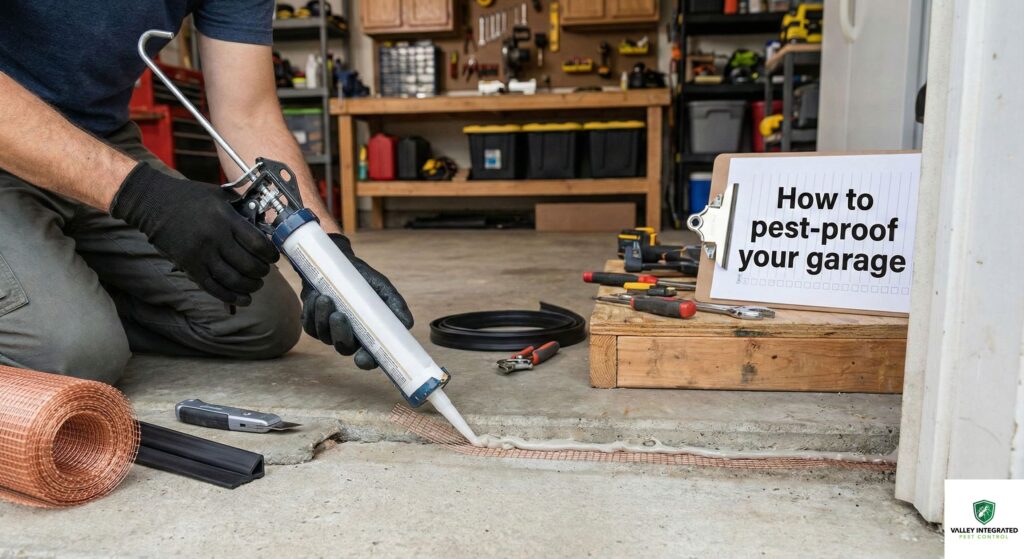
The garage: Your home’s unwitting welcome mat for pests
For many of us, the garage is the unsung hero of the home. It’s a workshop, a storage space, and the buffer between our living area and the outside world. Unfortunately, for pests like rodents and insects, it can also be a wide-open door. Garages often have numerous small gaps and utility penetrations that act as superhighways for critters seeking food, warmth, and shelter.
The common reaction to seeing rodent droppings or a line of ants is to set out traps or spray a chemical barrier. While these can offer temporary relief, they don’t solve the underlying problem. Pests will continue to find their way in. Effective, long-term pest control for your garage or shed isn’t about fighting the pests already inside; it’s about building an impenetrable fortress so they can never enter in the first place. This requires a shift in thinking from a homeowner to a builder, focusing on the structure itself.
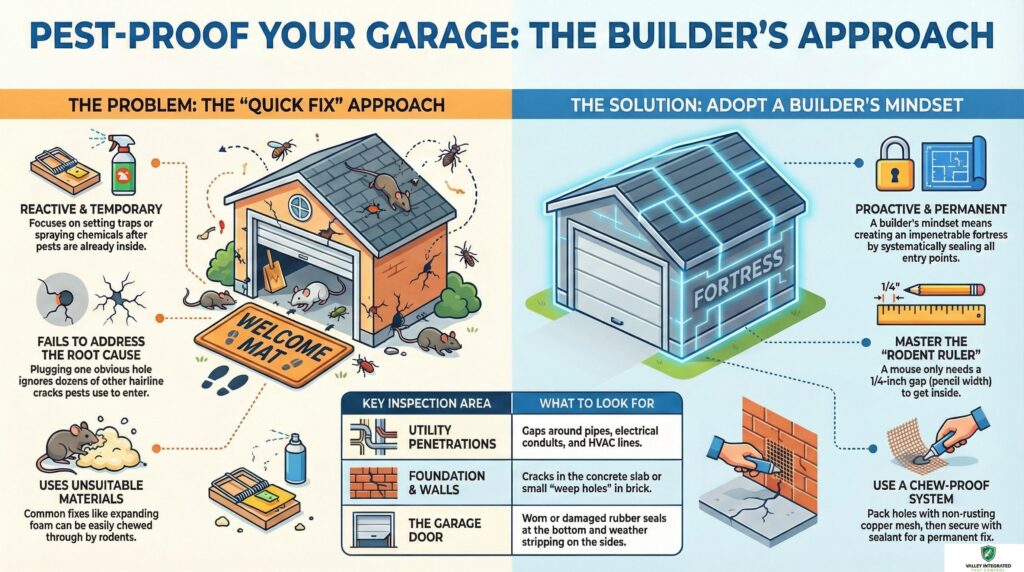
Superficial fixes vs. structural solutions: A tale of two approaches
When it comes to making your garage pest-free, homeowners generally take one of two paths. Understanding the difference is crucial for achieving lasting peace of mind. One way offers a quick fix, while the other provides a permanent solution. Here is a list of factors to consider.
Superficial Pest Control (The Quick Fix)
This approach focuses on reacting to a pest you can see. It involves randomly plugging visible holes you stumble upon, often with unsuitable materials like expanding foam sealant that mice can easily chew through. It also includes basic cleaning and setting snap traps or glue boards after an infestation has already begun. While it feels productive, it’s a defensive strategy that fails to address the root cause of the problem—the entry points.
Systematic Structural Sealing (The Permanent Solution)
This is the builder’s mindset. It’s a proactive strategy based on the science of exclusion techniques. This approach involves a thorough pest inspection of the entire building envelope to identify and seal all potential entry points, no matter how small. It uses specific, durable materials chosen for their ability to withstand both gnawing and the elements. This is the foundation of true Integrated Pest Management (IPM), a method that prioritizes prevention.
Key factors in your decision
Long-term effectiveness vs. temporary fixes
A few traps might catch the mice you see today, but they do nothing to stop their relatives from moving in tomorrow. Structural sealing is a one-and-done solution. A ‘right first time’ approach to proofing involves using the best methods and materials to offer the most permanent solution possible, saving you time and frustration down the road.
Thoroughness of the solution
Pests are relentless opportunists. Plugging one obvious hole while ignoring a dozen hairline cracks is an invitation for failure. A systematic approach examines everything: foundation cracks, weep holes, gaps around utility penetrations for pipes and wires, and improperly sealed vents.
Use of correct, durable materials for sealing
Stuffing a hole with steel wool is a common piece of DIY advice, but standard steel wool rusts and disintegrates over time, reopening the entryway. A professional understands that using the right material—like non-rusting copper mesh packed tightly and secured with sealant—is essential for a chew-proof, weatherproof, and permanent seal.
Understanding of specific pest entry-point dimensions
Do you know the exact size of the gap a mouse needs to squeeze through? Or a rat? Or a cockroach? An expert does. This knowledge transforms the task from a guessing game into a precise, scientific process of elimination.
Think like a builder: Mastering the “rodent ruler”
Effective rodent control begins with understanding the astonishing biology of your adversary. The battle is truly a game of millimeters. For instance, mice can fit through a hole the width of a pencil, which is just 1/4 inch or 6 millimeters in diameter. Their larger cousins, rats, can get through openings as small as a half-dollar coin, or ½ inch. Their skeletons are collapsible, allowing them to flatten their bodies to an incredible degree.
To start your pest proof project, you need to perform a detailed inspection of your garage. Get a flashlight and a pencil. Systematically examine the exterior and interior walls, especially where the foundation meets the siding. Pay close attention to:
- Utility Penetrations: Gaps around pipes, electrical conduits, and HVAC lines.
- Foundation Cracks: Even small cracks in the concrete slab or foundation wall are potential entry points.
- Garage Door Gaps: The corners and bottom of the main garage door are notoriously vulnerable.
- Weep Holes: Small drainage holes in brick exteriors are perfectly sized for mice.
Use the pencil as your gauge. If it can fit into a crack or hole, a mouse can, too. Mark every spot you find. This systematic approach ensures you don’t miss the less obvious vulnerabilities that pests are experts at finding.
Sealing entry points the right way: Materials matter
Once you’ve identified the weak points, the next step is to seal them with the right materials. This is where many DIY pest control efforts fall short. Simply spraying some expanding foam like Great Stuff into a hole might seem like a good idea, but rodents can and will chew right through it.
For a permanent, professional-grade seal, you need a two-part system. For small holes, the CDC recommends they should be filled with steel wool and then secured with caulk. However, for the best long-term results, we can improve on this. To properly block rodents and even termites, building science experts advise that builders should use copper or stainless steel mesh plus caulk or foam around holes in exterior walls. This combination is key. The metal mesh is chew-proof, and the sealant holds it firmly in place while blocking airflow, which can attract pests.
For larger holes, you’ll need to use more robust materials like hardware cloth (a sturdy metal screen), sheet metal, or cement patching. The goal is to make the patched area stronger than the surrounding material.
Beyond rodents: Your vents are an insect superhighway
While mice and rats are a big concern, they aren’t the only uninvited guests. Many homeowners wonder how to bug proof a garage, and the answer often lies overhead. Soffit vents, gable vents, and other ventilation openings are critical for your home’s health, but their standard screens are often not enough to stop determined bugs.
You might be surprised to learn that gaps of 1/16 of an inch or less will permit entry of insects and spiders. This means pests like cockroaches, spiders, crickets, and silverfish can easily get through many standard vent screens. To stop this insect superhighway, you may need to upgrade your vent screens to a finer mesh. For example, a standard window screen is about 18×16 mesh (18 strands one way, 16 the other, per square inch), which is effective against mosquitoes. However, for smaller insects, you might consider an even finer mesh. Ensuring your vent screens are intact and properly sized is a critical step in comprehensive insect control.
The unseen fortress: How air sealing creates a pest-proof barrier
What’s fascinating is that the same techniques used to make your home energy-efficient are also your best weapons in pest prevention. The practice of air sealing—closing up unintended gaps and cracks in a building’s envelope to stop drafts—also stops pests. When you seal a crack, you’re not just blocking a physical path; you’re also stopping the flow of air that carries scents from your home to the outside, which is what attracts pests in the first place.
The single largest opening in your garage is the main garage door. A worn or damaged garage door seal is a major vulnerability. To ensure a tight fit, the bottom of the door should be fitted with a quality rubber seal; experts note that vinyl seals should be avoided as they perform poorly in cold weather. A new door sweep can make a huge difference. Additionally, ensure the weather stripping along the sides and top of the door frame is intact.
You may have also seen a common home security tip asking, “Why should you put a zip tie on your garage door?” This refers to securing the emergency release latch to prevent break-ins. While primarily a security measure, a securely locked and aligned door is also a better-sealed door, which can help your pest-proofing efforts.
Creating an inhospitable environment inside your garage
Exclusion is the most important step, but what you do inside your garage also matters. Effective pest proofing involves making the space as unappealing as possible. This is a core tenet of sanitation practices and a good garage maintenance checklist.
Start with aggressive clutter removal. Piles of cardboard boxes, old newspapers, and general clutter are perfect nesting materials and hiding spots for rodents and insects like spiders and cockroaches. If you want to spider proof your garage, eliminating their hiding spots and the insects they feed on is the most effective method. Switch from cardboard boxes to airtight containers made of hard plastic or metal. This is especially critical for storing items like pet food, birdseed, or grass seed, which are a major food source for pests. Make sure your trash can management is on point, with tightly sealed lids.
Finally, address any issues with moisture control. Leaky pipes or poor drainage can create the damp environments that many pests, from carpenter ants to cockroaches, thrive in. In some cases, using a dehumidifier may be necessary.
Making the right choice for your needs
Achieving a truly pest-proof garage requires a commitment to a systematic, thorough approach. The best path forward depends on your comfort level, time, and the extent of the problem.
- The DIY Pro: If you are a hands-on homeowner comfortable with home improvement projects, you can certainly tackle this yourself. Your success will depend on your thoroughness. Use the “rodent ruler” principle, conduct a meticulous inspection, and invest in the right materials—copper mesh and high-quality caulk, not just a can of foam. Your goal is to find and seal every single gap 1/4 inch or larger.
- The Overwhelmed Homeowner: If you’ve just seen a mouse and your first instinct is to find a quick fix, take a deep breath. While setting a few traps is fine for the immediate issue, understand that it’s a temporary bandage on a larger problem. The real solution lies in exclusion. Educating yourself on why a structural approach is the only permanent fix will save you from a cycle of recurring infestations.
- The ‘Done-for-Me’ Delegator: If you are a busy property owner who values your time and expertise, hiring a professional is the most effective and efficient choice. Look for a professional exterminator or pest control company that talks like a builder. They should emphasize exclusion, a thorough inspection, and the use of durable, professional-grade materials. Their scientific approach is what will solve your problem for good.
Ultimately, a successful pest proofing strategy is about diligent prevention. Whether you’re in a warm climate like Phoenix, AZ, or a place with colder seasons like Columbus, OH, the principles of denying pests entry to your home remain the same. By adopting this builder’s mindset, you can make your garage and home a fortress, protecting your property and your peace of mind for years to come.
For homeowners in the Fresno, CA area who are looking for a definitive, long-term solution to their pest problems, the expert team at Valley Integrated Pest Control is here to help. With our deep understanding of building construction and pest biology, we implement systematic exclusion strategies that solve the problem at its source. Contact us today for a comprehensive assessment and a free, no-obligation quote.


