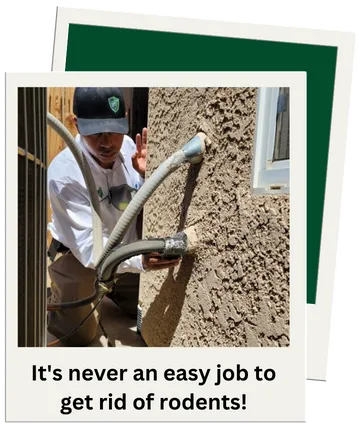

Valley Integrated Pest Control - Rodent Control Services in Fresno, CA
Rodent control in Fresno is not a one-size-fits-all problem. The Central Valley’s climate, agricultural surroundings, and mix of older residential neighborhoods and newer construction create conditions where Norway rats, roof rats, and house mice cycle through active and dormant seasons differently than they do in coastal California cities. Getting rid of rodents permanently requires understanding which species you’re dealing with, how they’re entering your structure, and what combination of exclusion, trapping, and habitat modification will break the cycle – not just disrupt it temporarily.
At Valley Integrated Pest Control, our rodent control process for Fresno properties combines entry-point sealing with steel mesh, strategically placed tamper-resistant bait stations, and 90-day follow-up inspections. Unlike one-time treatments that address the visible population while leaving structural gaps open, our follow-up protocol verifies that re-entry routes have been permanently blocked and that no secondary population has established in the interim.
Valley Integrated Pest Control is an independently owned and operated Fresno pest control company serving Fresno and the surrounding Central Valley, with no long-term contract requirement. Licensed for structural pest control in California (SPCB License #7965), the company provides rodent control, exclusion, and pest management for local homes and businesses with the thorough inspections and effective follow-through customers consistently mention in GBP reviews. Our team includes technicians Jessie and Manuel, who are often named for professional, knowledgeable service and for explaining what they find, why it happened, and how to help prevent rodents from returning.
The Three Rodent Species You're Most Likely Dealing With in Fresno
Fresno sits at the intersection of urban density and agricultural land – a combination that supports three primary rodent species, each with different behavior patterns that affect how control strategies need to be structured.
Norway Rats (Rattus norvegicus)
Norway Rats (Rattus norvegicus) are California’s most common rat species and the most likely culprit in ground-level infestations. They are large animals – weighing between 140 and 500 grams – with a distinctive shorter tail relative to body length. Norway rats burrow: every burrow system includes at least one primary entrance and one hidden bolt-hole escape route. They breed rapidly, producing up to six litters per year, which means a population left untreated can double in weeks. In Fresno, Norway rats concentrate around concrete foundations, crawl spaces, and any area with consistent food access – grain storage, compost, unsecured trash.
Roof Rats (Rattus rattus)

Roof Rats (Rattus rattus) – also called black rats or ship rats – are the second major species in Fresno. Unlike Norway rats, roof rats are exceptional climbers. They enter structures at roofline level, through gaps in eaves, utility line penetrations, and HVAC openings. They are omnivorous generalists and cause significant damage to attic insulation, wiring, and stored materials. In Fresno’s older residential neighborhoods – particularly areas with mature trees adjacent to rooflines – roof rat pressure is highest in fall and winter when they seek warmth and consistent food sources.
House Mice (Mus musculus)

House Mice (Mus musculus) are the smallest of the three species and the most capable of exploiting tiny structural gaps. A house mouse can enter through a gap as small as a quarter-inch. They are adaptive breeders and are particularly difficult to control with trapping alone if entry points are not sealed concurrently. House mice infestations escalate quickly indoors because they nest in insulation, wall voids, and cabinet interiors where they remain largely invisible until the population reaches significant size.

Kangaroo Rats
Kangaroo Rats are also present in Fresno-area environments, particularly in properties bordering undeveloped land. While not a structural pest in the same way as Norway and roof rats, their presence signals an active rodent pressure zone.
What Effective Rodent Control in Fresno Actually Involves
The fastest path to permanent rodent elimination combines three components simultaneously. Any approach that omits one of these creates a predictable failure point.
1. Entry-Point Sealing (Exclusion)
Rodent control that does not permanently seal entry points will not produce lasting results. Trapping and baiting reduce the active population inside, but without physical exclusion, a new population re-establishes within weeks through the same access routes. Entry points are sealed with steel mesh, hardware cloth, or copper mesh - materials rodents cannot gnaw through - at all foundation gaps, utility penetrations, pipe chases, vents, and roofline openings. A professional inspection maps every potential entry point before any trapping or baiting begins.
2. Targeted Trapping and Bait Stations
Tamper-resistant bait stations are positioned based on rodent activity evidence - droppings, grease trails, gnaw marks, and nesting material - rather than placed arbitrarily. Snap traps and glue boards are deployed as complementary tools in interior zones where bait stations are not appropriate (near food prep areas, child-accessible spaces, or areas with domestic pets). Monitoring frequency matters: stations checked too infrequently allow populations to recover; stations checked on a structured schedule provide data on whether activity is declining as expected.
3. Habitat Modification
Eliminating conditions that attract and sustain rodent populations prevents re-infestation after the active treatment phase. This includes removing harborage sites (wood piles, debris, dense ground cover adjacent to the structure), securing food sources (including bird feeders, pet food, and compost), and addressing moisture conditions that support nesting in crawl spaces and wall voids.
Why Rodent Pressure Spikes in Fresno Winters
Fresno’s Central Valley climate means rodent populations that have been feeding in agricultural areas during warmer months begin seeking structural warmth and shelter as temperatures drop – typically starting in October and peaking between November and February. This seasonal migration is why residents who haven’t experienced rodent problems during summer months discover signs of infestation in late fall. It is also why structures with unsealed entry points are repeatedly re-infested year after year: the same access points used in winter allow new rodent entry every subsequent season.
How to Know If You Have a Rodent Infestation in Your Fresno Home
Rodent infestations are often well-established before visual confirmation occurs. Earlier indicators include:
- Droppings – Norway rat droppings are capsule-shaped and approximately ¾ inch long; roof rat droppings are smaller with pointed ends; house mouse droppings are very small (¼ inch) with pointed ends.
- Grease trails and rub marks – dark smudge marks along walls, pipes, and beams where rodents travel repeatedly on fixed routes.
- Nesting materials – shredded paper, insulation, fabric, or plant material in concealed areas such as wall voids, attic corners, or under appliances.
- Gnaw marks – on wood, wiring, and food packaging. Fresh gnaw marks are light-colored; older gnaw marks darken.
- Sounds – scratching, scurrying, or gnawing sounds from walls, ceilings, or attic spaces, typically most noticeable at night.
- Odor – a musky, ammonia-like smell in enclosed spaces indicates active rodent presence.
If you observe any of these signs, the population is already large enough to leave physical evidence – meaning treatment should begin promptly.
Rodent Control Service Areas in Fresno County
Valley Integrated Pest Control provides rodent control services throughout Fresno County, including Fresno, Clovis, Madera, Sanger, and Selma. Service is available for residential and commercial properties across Central Valley communities.
Frequently Asked Questions About Rodent Control in Fresno
The most effective rodent control combines three simultaneous approaches: permanent entry-point sealing with steel mesh or hardware cloth, targeted trapping and tamper-resistant bait station deployment, and habitat modification to eliminate attractants. Approaches that address only the visible population without sealing structural entry points produce temporary results because new rodents enter through the same access routes within weeks.
Yes – but only when the treatment plan includes permanent exclusion. A professional rodent elimination service that seals all identified entry points, deploys interior trapping, and conducts follow-up inspections to verify re-entry has been prevented can produce lasting results. Treatments that rely solely on poison bait or trapping without exclusion do not permanently resolve infestations.
Yes. Rodents carry and transmit multiple diseases including hantavirus, leptospirosis, and salmonellosis – through their droppings, urine, and nesting material, and through secondary transmission via parasites such as fleas and ticks they carry. Rodent gnawing on electrical wiring is also a documented fire hazard. Infestations should be treated promptly, and contaminated materials (nesting, droppings, insulation) should be removed by professionals using appropriate protective equipment.
Professional rodent control in Fresno begins with a property inspection to identify entry points, evidence of activity, and species present. The inspection informs a treatment plan that typically includes sealing entry points, placing tamper-resistant bait stations at activity sites, deploying traps in interior areas, and scheduling follow-up visits to monitor population decline and verify exclusion integrity.
Early indicators include droppings (size and shape vary by species), grease rub marks along walls and pipes, gnaw marks on wood or wiring, shredded nesting material in concealed areas, nighttime scratching or scurrying sounds from walls or ceilings, and a musky ammonia-like odor in enclosed spaces. If any of these signs are present, infestation is likely already established and professional inspection is recommended.
Rodent control costs in Fresno vary based on the size of the property, the severity of the infestation, species involved, and the scope of exclusion work required. Valley Integrated Pest Control offers free estimates – call (559) 307-0612 or submit an inquiry online to receive a property-specific assessment without obligation.
Rodent pressure in Fresno typically peaks between October and February. As Central Valley temperatures drop, Norway rats, roof rats, and house mice that have been active in outdoor and agricultural environments seek structural warmth and consistent food sources. Properties with unsealed entry points are most vulnerable during this period.
Timeline depends on infestation severity and species. Active population reduction typically occurs within 1 – 2 weeks of treatment. Complete elimination, including confirmation that re-entry has been prevented, requires follow-up inspection – Valley Integrated Pest Control includes 90-day follow-up inspections to verify permanent results.
CALL VALLEY INTEGRATED PEST CONTROL FOR ALL OF YOUR RODENT CONTROL NEEDS IN FRESNO, CA! 559-307-0612
Valley Integrated Pest Control is a licensed pest control company serving Fresno, Clovis, Madera, Sanger, Selma, and surrounding Fresno County communities. Call (559) 307-0612 for a free rodent control estimate.
Rodent Control Service Areas in Fresno County
Valley Integrated Pest Control provides rodent control services throughout Fresno County, including Fresno, Clovis, Madera, Sanger, and Selma. Service is available for residential and commercial properties across Central Valley communities.
Why We're the Right Choice:

We value our clients

Affordable Service Prices

Best Knowledge & Equipment in the Industry