
The most effective way to stop ants on your fruit trees is to disrupt the symbiotic relationship they have with sap-sucking pests like aphids. This is achieved not with simple sprays, but by implementing a multi-layered strategy that includes physical trunk barriers, scent-based repellents from companion plants, and the introduction of beneficial predatory insects that eliminate the ants’ food source.
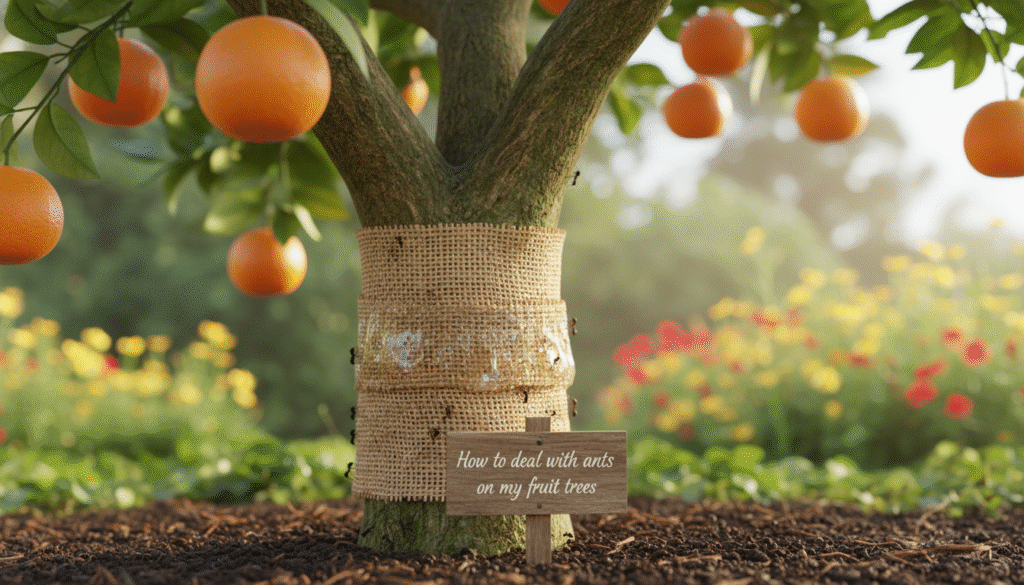
Why Are Ants on My Fruit Tree? Understanding the Real Problem
Seeing a long ant trail on a tree trunk, winding its way up to the leaves of your prized peach or apple tree, is a frustrating sight. Your first instinct might be to grab a spray to kill the ants you see, but this is a temporary fix for a much more complex issue. The truth is, the ants themselves are rarely the primary threat. They are a symptom of a deeper problem, a clear signal that your fruit tree is under a different kind of attack.
So, what are ants doing on my fruit tree? They are acting as farmers. Many common fruit trees, from a peach tree to a citrus tree, can become hosts for colonies of small, sap-sucking insects. The most common culprits are aphids, but this group also includes mealybugs and scale. These pests pierce the tender leaves and stems to feed on the nutrient-rich sap. As they digest this sap, they excrete a sugary, sticky liquid called honeydew. This is what the ants are after. In fact, fruit trees can host aphids, mealybugs, and scales which excrete a sweet honeydew nectar that attracts ants, demonstrating the symbiotic relationship. This is the core of the ants farming aphids on trees phenomenon.
This partnership is a classic example of a symbiotic relationship in nature. The ants get a consistent, high-energy food source (honeydew), and in exchange, they protect the aphids from their natural predators like ladybugs, lacewings, and parasitic wasps. They will aggressively fight off these beneficial insects, effectively providing a security detail for the pests that are actively damaging your tree. This is why you should worry about ants on your fruit trees; not because they will eat your peaches on the tree (though some species might nibble on fallen fruit), but because they are enabling a much larger infestation that can weaken your tree, reduce fruit yield, and lead to other complications.
The Secondary Damage: Sooty Mold
The problems don’t stop with the sap-sucking. The excess honeydew that ants don’t consume coats the leaves and branches of the tree. This sticky layer becomes an ideal breeding ground for a black, unsightly fungus known as sooty mold. While sooty mold on fruit tree leaves doesn’t directly infect the tree, it covers the surface of the leaves, blocking sunlight and impeding photosynthesis. A severe case of sooty mold can stress the tree, stunt its growth, and further reduce the quality and quantity of your fruit. Learning how to remove sooty mold from leaves is important, but it’s a reactive measure. The best fruit tree pest management focuses on preventing the honeydew buildup in the first place by controlling the ant and aphid alliance.
Are Ants Bad for Fruit Trees? Damage, Benefits, and When to Worry
Ants aren’t inherently bad for fruit trees, but they’re rarely a good sign. A few scouts are harmless; an organized trail up the trunk means they’re farming something that’s damaging your tree right now.
What Do Ants Actually Do to Fruit Trees?
Common ants like Argentine ants don’t chew leaves, bore into bark, or eat roots. The damage is indirect: by guarding aphids, mealybugs, and scale, they let those colonies explode — causing curled leaves, sooty mold, and a smaller fruit crop.
Can Ants Kill a Fruit Tree?
Not on their own. But an unmanaged aphid infestation can push a young or stressed tree into decline, and carpenter ants entering the trunk signal existing wood rot — the rot, not the ants, is the threat.
Do Ants Eat the Fruit Itself?
Not intact fruit. They go for split, overripe, or fallen fruit. Picking up drops weekly removes a major attractant.
Are Ants Ever Good for Fruit Trees?
Sometimes. They aerate soil, recycle organic matter, and eat some pest larvae. That’s why the goal isn’t eradicating ants from your yard — just keeping them out of your trees.
When to Worry
Act if you see: a defined two-way trail on the trunk, sticky leaves or sooty mold, or large ants entering holes in the wood. Any of these means the ant-aphid alliance is established — which brings us to choosing the right strategy.
A Tale of Two Strategies: Symptomatic vs. Systematic Control
When dealing with an ant infestation on a cherry tree or any other fruit tree, homeowners typically follow one of two paths. Understanding the difference between these philosophies is crucial for developing a plan that yields lasting results.
The Symptomatic Approach: The Quick Fix
This strategy focuses on what you can see: the ants. It involves using contact-based solutions to eliminate the worker ants marching up the trunk. Common methods include:
- Homemade Ant Sprays: Many people search for a homemade ant spray for trees. A simple soap and water spray for ants on trees, often made with a squirt of dish soap in a spray bottle of water, is a popular choice. The question “will dish soap kill ants on fruit trees?” has a simple answer: yes, it kills them on contact by washing away their protective outer layer.
- Vinegar Sprays: Similarly, people ask, “can I spray vinegar on my fruit trees?” While diluted vinegar can kill ants and, more importantly, wiping surfaces with it can eliminate the pheromone trails they use to communicate, applying it directly to foliage can burn the leaves of sensitive plants.
- Contact Insecticides: Over-the-counter chemical sprays are designed to kill ants quickly.
The appeal of this approach is its immediacy. You spray the ant trails on the tree trunk, and the ants die. The problem is that it does absolutely nothing to address the reason the ants are there. The aphid colony remains, producing more honeydew, and the ant colony, which can number in the tens of thousands, simply sends new workers. As experts at The Spruce point out, simply killing worker ants with pesticide sprays will not solve the problem; you must eliminate the entire colony or remove their reason for being there.
The Systematic Approach: The Fortress Defense
This strategy, which we advocate for long-term fruit tree health, is based on our core thesis: effective, long-term ant control is not about killing individual ants, but about systematically dismantling the symbiotic ant-aphid alliance by creating a multi-layered, defensive ecosystem. It addresses the root cause of the infestation. Instead of a single action, it involves creating several layers of defense that make your tree an inhospitable and unattractive place for ants and the pests they protect. This is how you get rid of ants in a tree without killing the tree and ensure its health for years to come.
Building a Fortress: Your 4-Step Plan for Long-Term Ant Control
Ant proofing fruit trees is about being strategic. Instead of a one-time attack, you will build a series of defenses that work together to protect your tree. This is the best way to eliminate ants on trees for good.
Layer 1: Break the Supply Lines with Physical Barriers
The most direct and effective first step is to stop the ants from ever reaching the aphids. You need to create an impassable “moat” around the trunk of your tree. This physically blocks the ant superhighway.
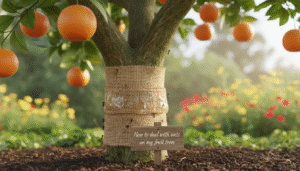
The industry standard for this is a sticky barrier product, with Tanglefoot for fruit trees being the most well-known brand. This is a non-drying, sticky paste that creates a band around the trunk that ants cannot cross. Knowing how to apply Tanglefoot insect barrier correctly is key:
- Protect the Bark: Never apply Tanglefoot directly to the bark of a tree, especially not on young fruit trees or those with thin bark. It can cause discoloration or damage. First, wrap a protective layer around the trunk. You can use tree wrap paper, a sturdy waterproof tape like duct tape, or a wide band of thick card stock. Ensure the wrap is snug but not so tight that it will girdle the tree as it grows.
- Apply the Barrier: Using a putty knife or disposable stick, apply a thin, even layer of the Tanglefoot or other ant grease for fruit trees onto the protective wrap. The band should be about 2-3 inches wide.
- Maintain the Barrier: Over time, the sticky tape for tree trunks can become covered in dust, debris, and dead insects, creating a bridge for other ants to cross. Check the barrier every couple of weeks and stir it with a stick to expose a fresh sticky surface, or reapply as needed.
A good Tanglefoot alternative can be simple petroleum jelly on tree trunk for ants, though it may need more frequent reapplication as it can run in high heat. What is the best ant barrier for fruit trees? One that is consistently maintained. This single step of tree banding for ant control can solve a surprising number of ant problems by immediately cutting off the aphids from their protectors.
Layer 2: Deploy an Olfactory Shield with Companion Planting
With the physical route blocked, the next step is to make your tree “invisible” to ant scouts searching for new opportunities. Ants navigate their world primarily through their sense of smell, using pheromone trails to guide their nestmates. You can disrupt this by creating an “olfactory shield” of strong-smelling plants around the base of your tree.
This goes beyond just planting pretty flowers. It’s a form of biological warfare. According to horticultural research, ants have four to five times as many scent receptors in their antennae as other insects. Plants with powerful essential oils create an environment that is overwhelming to their sensitive senses, effectively jamming their communication and navigation systems. They can’t find the tree, and they can’t lay down a clear pheromone trail for others to follow.
Excellent companion plants for natural ways to repel ants from garden and orchard settings include:
- Rosemary: This hardy, woody herb emits a powerful pine-like scent.
- Mint (in pots): Peppermint and spearmint are incredibly effective, but they are also highly invasive. Plant them in pots placed around the base of your fruit tree to contain their aggressive root systems.
- Lavender: Known for its calming scent to humans, lavender is a strong deterrent for many insects, including ants.
- Thyme: A low-growing ground cover that can create a fragrant carpet around the tree base.
- Marigolds: A classic in natural pest control for fruit trees, their scent is offensive to a wide range of pests.
Using something like cinnamon to deter ants on trees by sprinkling it at the base can also work as a temporary olfactory repellent, but companion planting provides a living, continuous shield.
Layer 3: Recruit a Rival Army of Beneficial Predators
Now that you’ve cut off the ants’ access and made the tree harder to find, it’s time to deal with the aphids they left behind. Without their ant protectors, the aphids are vulnerable. This is the perfect time to introduce or attract their natural enemies, effectively recruiting a rival army to clean up the problem for you.
The two most famous beneficial insects for aphid control are ladybugs and lacewings. You can often purchase live ladybugs for aphid control on trees from garden centers. When releasing them, do so in the evening at the base of the infested tree; they are less likely to fly away immediately and will start searching for food. Lacewing larvae, often called “aphid lions,” are even more voracious predators of aphids.
To attract these predators naturally, you can plant flowers that provide them with nectar and pollen. Plants like dill, fennel, yarrow, and cosmos are excellent choices for attracting a standing army of beneficial insects to your garden, ensuring you always have predators on patrol to manage pests like aphids and mealybugs.
Layer 4: Address the Ant Colony at its Source (When Necessary)
For a severe or persistent infestation, especially from aggressive species like fire ants or carpenter ants in fruit trees, you may need to take action against the nest itself. If you’ve followed an ant trail back to a nest at the base of a tree, targeted treatment is far more effective than spraying the tree itself.
Ants on Peach, Apple, and Citrus Trees: Does the Tree Type Matter?
The 4-step strategy above works on every fruit tree. What changes is which sap-sucking pest the ants are farming — and knowing that tells you what to treat.
Ants on Peach and Nectarine Trees
Stone fruit pushes tender new growth that green peach aphids love, so ant trails often appear in spring right as shoots emerge. Peaches also split and drop easily; clean up fallen fruit fast, because ripe stone fruit on the ground is a standing invitation.
Ants on Apple Trees
On apple trees, look for rosy apple aphid (curled, reddish leaves) and woolly apple aphid (white, cottony clusters on branches and pruning scars). Ants farm both. If leaves are curling in spring, treat the aphids — the ants will lose interest on their own.
Ants on Citrus and Lemon Trees
Citrus is a year-round target because soft scale and mealybugs — both honeydew producers — stay active in Fresno’s mild winters. A trunk barrier matters most here, since the ant traffic never really gets a seasonal break.
Ants on Cherry, Plum, and Pear Trees
Cherry blackfly and plum aphid cause tightly curled, blackened leaf tips that shelter the colony from sprays — another reason barriers and predators beat spraying. On pears, heavy honeydew and sooty mold can also point to pear psylla, which ants tend just like aphids.
Whatever the tree, the playbook is the same: block the trunk, remove the honeydew producers, and the ants move on.
What Kind of Ants Are on Your Fruit Tree? Black, Red, and Carpenter Ants
The species on your trunk determines the threat — and the treatment.
Small Black Ants
Argentine ants and odorous house ants are the most common trail-makers on Fresno fruit trees. They’re the honeydew farmers this article is about: harmless to the wood itself, and exactly what the 4-step plan is built for.
Red and Fire Ants
Red imported fire ants nest in soil mounds near the base and are more a hazard to you than the tree — their stings make harvesting risky. Skip the trunk treatments and bait the mound directly.
Large Black Carpenter Ants
Carpenter ants don’t eat wood, but they excavate nests in wood that’s already soft and rotting. Piles of sawdust-like frass at the base or ants entering trunk cavities are clear signs of carpenter ant damage mean the real problem is rot or trapped moisture. Fix the underlying issue — and have an arborist assess whether the tree is structurally sound.
Not sure which you have? Follow the trail. Heading up into the canopy: honeydew farmers. Disappearing into a soil mound: fire ants. Entering the trunk itself: carpenter ants.
How to Get Rid of an Ant Nest at the Base of a Fruit Tree
If the trail leads to a nest at the base of your tree, treat the colony — not the tree.
Find it. Follow the workers at their busiest (early morning or dusk) to the nest entrance: a soil mound, a crack near the root flare, or a gap under mulch.
Bait it. Place a slow-acting bait like boric acid along the trail, near — not on — the nest. Workers carry it back and feed the queen, collapsing the colony from inside within one to two weeks. Enclosed bait stations keep it away from pets and kids.
Don’t drench it. Pouring insecticide, boiling water, or bleach into soil at the base damages the fine feeder roots your tree depends on — and usually just makes the colony relocate a few feet away. The same goes for digging out the nest.
Killing the nest without removing the aphids overhead means a new colony will claim the territory. Pair this with the trunk barrier and aphid control from the 4-step plan.
Decision Factors: Choosing Your Ant Control Strategy
The path you choose for ant control has consequences for your time, budget, and the local ecosystem. Here is a direct comparison of the two main philosophies based on the factors that matter most.
Long-Term Effectiveness vs. Short-Term Fixes
Symptomatic Control (Sprays): Offers immediate but temporary results. It kills the ants you see today, but new ants from the colony will return tomorrow as long as the food source (aphids) remains. This creates a cycle of repeated application.
Systematic Management (Ecosystem): Focuses on a permanent solution. By removing the food source and creating physical barriers, it eliminates the reason for the ants to be on the tree in the first place. This is a “do it right once” approach that provides lasting protection.
Addressing the Root Cause vs. Treating Symptoms
Symptomatic Control (Sprays): Only treats the symptom (visible ants). It’s like taking a cough drop for pneumonia; it makes you feel better for a moment but does nothing to cure the underlying illness. The aphid or mealybug infestation continues to damage the tree.
Systematic Management (Ecosystem): Directly targets the root cause—the symbiotic relationship ants and aphids share. By controlling aphids to stop ants, you solve both problems simultaneously and restore the health of your tree.
Environmental Impact and Safety for Beneficial Insects
Symptomatic Control (Sprays): Often involves broad-spectrum insecticides. Even organic or safe insecticide for fruit trees can have unintended consequences. Critically, synthetic insecticides like permethrin or cypermethrin can kill beneficial bugs such as bees and ladybugs, which disrupts the local ecosystem and can make pest problems worse in the long run.
Systematic Management (Ecosystem): Is designed to be environmentally harmonious. Methods like sticky barriers, companion planting, and introducing predators are targeted and have minimal to no negative impact on pollinators and other helpful insects. It enhances biodiversity rather than diminishing it.
Reliance on Chemical Intervention vs. Natural Methods
Symptomatic Control (Sprays): Is almost entirely reliant on repeated chemical applications, whether natural or synthetic. You are constantly on the offensive, reacting to new waves of ants.
Systematic Management (Ecosystem): Builds a resilient, self-regulating system. Once established, the barriers, repellent plants, and predator populations work for you 24/7, creating a long-term, organic ant control for fruit trees that requires minimal ongoing intervention.
Which Ant Killers Are Safe to Use on Fruit Trees?
The rule for any tree you eat from: never spray insecticide into the canopy. Here’s what’s safe and what isn’t.
Safe:
- Enclosed bait stations at the base — the poison stays contained, off the fruit, and away from pets. The most effective option anyway, since it kills the colony.
- Sticky barriers (Tanglefoot on a protective wrap) — no pesticide at all.
- Insecticidal soap or horticultural oil — for the aphids, not the ants. Low-impact and food-safe when used as labeled.
Not safe:
- Broad-spectrum sprays (permethrin, cypermethrin and similar) — they kill bees and the ladybugs doing your aphid control, and leave residue on developing fruit.
- Anything sprayed during bloom — even organic products can harm pollinators on open flowers.
- Soil drenches near the trunk — systemic insecticides can move into the tree and its fruit.
Whatever product you choose, check the label for a pre-harvest interval — the required wait between application and picking. If a product doesn’t list fruit trees on the label, don’t use it on one.
Frequently Asked Questions About Ants and Fruit Trees
Homeowners often have similar questions when facing this issue. Here are direct answers to some of the most common concerns.
Can you save a tree infested with ants?
Absolutely. In most cases, the presence of ants, even in large numbers, is not a death sentence for a tree. It’s a serious warning sign that needs action. By implementing the systematic, multi-layered defense described above—creating barriers, disrupting their food supply, and managing the root pest—you can completely resolve the infestation and restore the tree to full health. The key is to act strategically rather than just reacting to the visible ants.
Does Dawn dish soap really kill ants?
Yes, a mixture of Dawn dish soap and water is an effective contact killer for ants. The soap breaks down the waxy exoskeleton of the insects, causing them to dehydrate and die. However, it is a purely symptomatic, short-term fix. It will not affect the main colony and does nothing to solve the aphid problem that is attracting the ants. It can also wash away the natural protective coating on leaves, so it should be used with caution.
How do you get rid of ants in a tree without killing the tree?
The safest and most effective methods are non-chemical and focus on the ecosystem. The top three ways are: 1) Applying a sticky barrier like Tanglefoot on a protective wrap around the trunk to physically block them. 2) Planting strong-smelling herbs like rosemary, mint, or lavender around the base to act as a natural repellent. 3) Introducing beneficial predators like ladybugs to eliminate the aphids, which removes the ants’ food source. These methods control the ants without applying any harmful substances to the tree itself.
Should I worry about ants on my fruit trees?
Yes, but not because of the ants themselves — they’re a sign of a sap-sucking pest infestation (aphids, mealybugs, or scale) that’s doing the real damage. See the section above on whether ants are bad for fruit trees for the full picture.
Do ants damage tree roots?
Most common ant species that you see on your fruit trees, like Argentine ants or odorous house ants, do not damage tree roots. They build their nests in the soil but do not feed on healthy root systems. An exception is carpenter ants, which excavate nests in wood. However, carpenter ants almost always infest wood that is already soft and decaying from moisture. So, if you see carpenter ants at the base of your tree, it could signal an underlying rot problem that needs to be addressed.
Making the Right Choice for Your Needs
The best approach to stopping ants on your fruit trees depends on your goals, your gardening philosophy, and how much time you’re willing to invest. There is no single “best” answer, only the right answer for your specific situation.
For The Organic Gardener:
Your primary need is for non-toxic, natural solutions that integrate into your garden’s ecosystem. You want to avoid anything that could harm pollinators, soil life, or the fruit you intend to eat. For you, the Systematic Ecosystem Management approach is a perfect fit. Start by creating a sticky barrier on the trunk. Simultaneously, begin companion planting with herbs like rosemary and thyme, and consider ordering ladybugs online to release on the tree. This method aligns perfectly with your principles of working with nature, not against it.
For The Pragmatic Homeowner:
Your goal is a definitive, long-lasting solution that protects your investment in your fruit trees. You want to solve the problem with minimal recurring effort. While you’re not opposed to using chemicals, you prefer a solution that is efficient and permanent. You would benefit most from an integrated approach. Start immediately with a high-quality sticky barrier like Tanglefoot to stop the current damage. Then, assess the severity of the aphid infestation. If it’s heavy, a targeted application of horticultural oil or insecticidal soap (both are low-impact options) can quickly knock down the aphid population. This combination provides both an immediate stop-gap and addresses the root cause for long-term peace of mind.
For The Frustrated Novice:
You’ve tried the simple fixes. You’ve used a soap and water spray or put out some ant traps from the hardware store, but the ants just keep coming back. You need a deeper understanding and a more strategic plan that actually works. Your best path forward is to fully embrace the Systematic Ecosystem Management philosophy because it explains *why* your previous efforts failed. Start fresh by focusing on the root cause. Ignore the ants on the leaves for now and focus on two things: 1) Apply a sticky barrier to the trunk immediately. This will give you a tangible, visible win. 2) Identify and eliminate the aphid colonies. This shift in focus from the ants to the aphids is the key insight you’ve been missing.
Ultimately, creating a healthy, resilient fruit tree is about building a balanced ecosystem rather than fighting endless skirmishes against pests. A thoughtful, integrated approach will always provide more lasting and satisfying results than a reactive spray. For homeowners in the Fresno, CA area looking for a personalized assessment and a comprehensive, long-term pest management plan tailored to your property, contact the expert team at Valley Integrated Pest Control today. We can help you build the fortress your trees deserve.


